In Ramadan, the Muslim’s encounter with the Qur’an is renewed; its verses are heard more often, hearts soften to its message, and believers return to the words that God described as:
“The month of Ramadan in which the Qur’an was revealed—a guidance for mankind and clear proofs of guidance and criterion.” (Qur’an 2:185)
Yet between the beauty of recitation and the depth of reflection lies a space where the Qur’an’s true impact is determined. Do we remain at the level of eloquent sound, or do we move toward a living awareness of meaning?
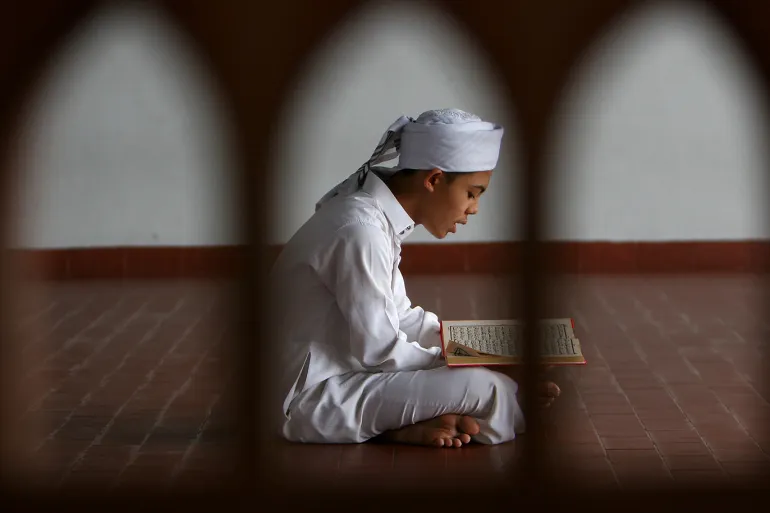
Recitation is a noble act of worship, commanded by the Qur’an itself:
“And recite the Qur’an with measured recitation.” (Qur’an 73:4)
It is a reading marked by composure and deliberation—preserving pronunciation, honoring meaning, and instilling reverence in the heart. The Prophet ﷺ said:
“The one who is proficient in the Qur’an will be with the noble, righteous scribes, and the one who recites it and finds it difficult will have two rewards.” (Agreed upon)
Thus, recitation is not merely a matter of vocal beauty; it is an act of devotion rewarded in proportion to sincerity and effort.
Yet the higher aim is reflection (tadabbur)—that the Qur’an moves from words recited to meanings lived. Hence the profound Qur’anic question:
“Do they not reflect upon the Qur’an?” (Qur’an 4:82)
Reflection is the heart’s pause before the divine address: hope at the promise, awe at the warning, insight from the narratives, and obedience to the commands.
The Prophet ﷺ would sometimes repeat a single verse in prayer, contemplating it deeply, such as the verse:
“If You punish them, they are Your servants…” (Qur’an 5:118)
He repeated it throughout the night, embodying the difference between a recitation that passes through the ear and one that settles in the heart.
In Ramadan, the believer’s bond with the Qur’an intensifies. It is the month of recitation and completion, yet above all, it is the month of guidance. The Prophet ﷺ said:
“Recite the Qur’an, for it will come on the Day of Resurrection as an intercessor for its companions.” (Narrated by Muslim)
The Qur’an is not only a text to be read, but a companion in both this life and the next.
When recitation and reflection unite, the Qur’an’s transformative power emerges—recitation with humility, understanding with presence, and practice with sincerity. The measure is not the number of pages read, but the depth of reverence, hope, and uprightness the Qur’an plants within the soul.
Ramadan teaches the reader to pause with every verse: What is this verse calling me to today? Which virtue does it awaken? Which shortcoming does it expose? In this way, the Qur’an moves from a momentary act of devotion to a guiding light for the whole day.
Between recitation and reflection… we stand where God says:
“A blessed Book We have revealed to you so that they may reflect upon its verses.” (Qur’an 38:29)
There, the beauty of recitation meets the guidance of meaning, and the Qur’an becomes life within the heart—not merely sound upon the tongue.